
Not every color in the hanky code whispers. Black commands. It's a symbol of power, domination, and the raw choreography of control — queer, precise, and never accidental.
The Hanky Code: more than fabric, it's a contract
The hanky code is a queer invention of need and nuance. Developed in the 1970s by the gay leather scene, it transforms a piece of cloth into an unmistakable invitation. Worn at the hip, each hanky signals not just desire, but intention. Color matters. And black doesn’t mess around.
A black hanky is about domination. Whether you're taking the reins or offering up your wrists, this color is loaded. It's not about soft edges — it's about agreed limits, cold chains, warm skin, and the unmistakable buzz of poppers before the collar clicks shut.
Left pocket: the Dom
Worn on the left, the black hanky signals you’re a Dominant. You orchestrate the scene, define the rules, and keep your bottom exactly where you want them — on their knees, waiting, grateful. You don’t shout to be heard: your presence, your posture, the firm placement of that hanky says enough. It's an elegant warning: *I’m in charge*.
Right pocket: the sub
On the right? You serve. You offer yourself, your silence, your submission. The black hanky worn this way says you want to be used, trained, perhaps restrained. This is about trust wrapped in leather, consent whispered in the dark, the pleasure of surrender. You’re the one who kneels, and you wear that role like a badge — with pride, and purpose.
Power exchange, coded in cotton
Today, you’ll spot black hankies in backrooms, on dungeon floors, under the red lights of fetish bars. The gay world still breathes through these signals — discreet but loud to the right eyes. A flash of black at the bar, a nod, a lean-in, and the scene writes itself. Poppers might blur the edges, but the code stays clear.
The black hanky doesn’t flirt. It claims. Whether you wear it to bind or to beg, it marks you — proudly — as someone who knows what they want, and isn't afraid to show it.
 Previous Post
Related Posts
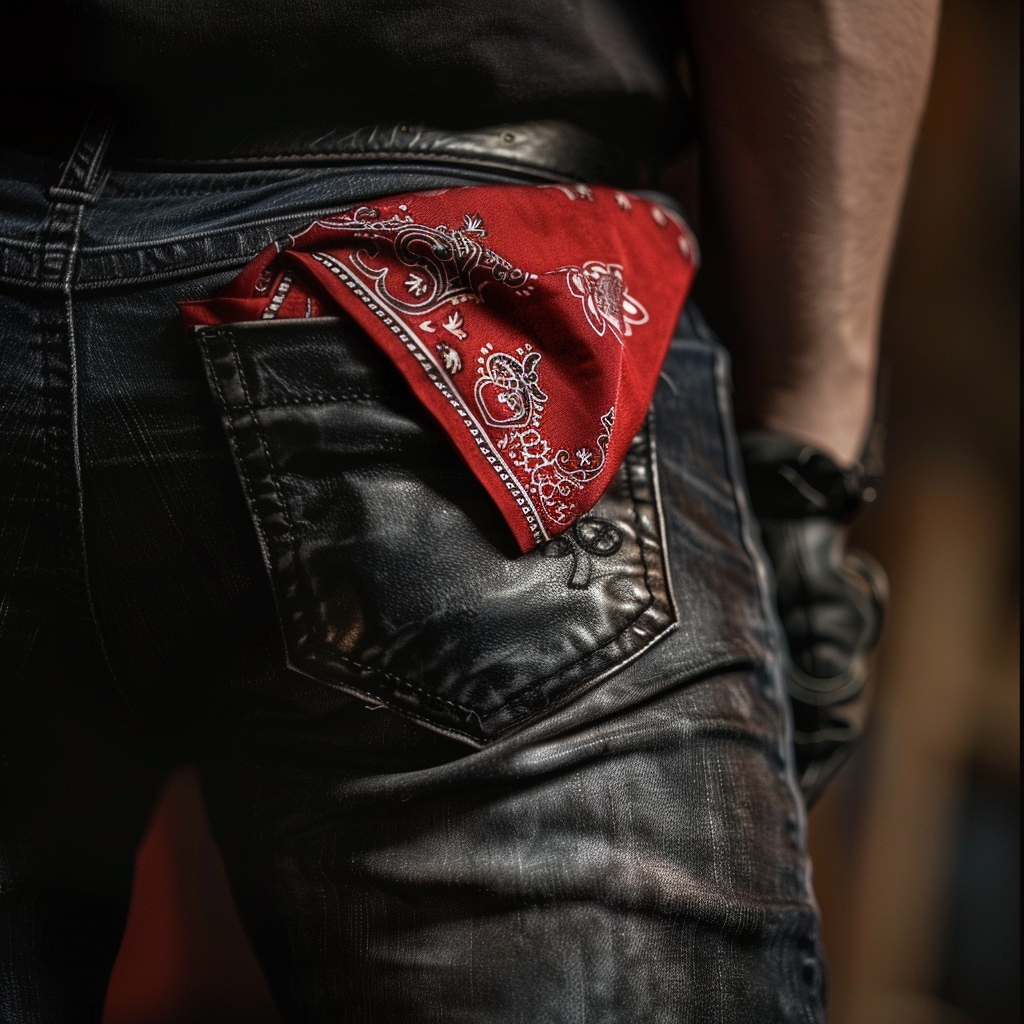

Blue Signal: Reading the Hanky Code One Fuck at a Time
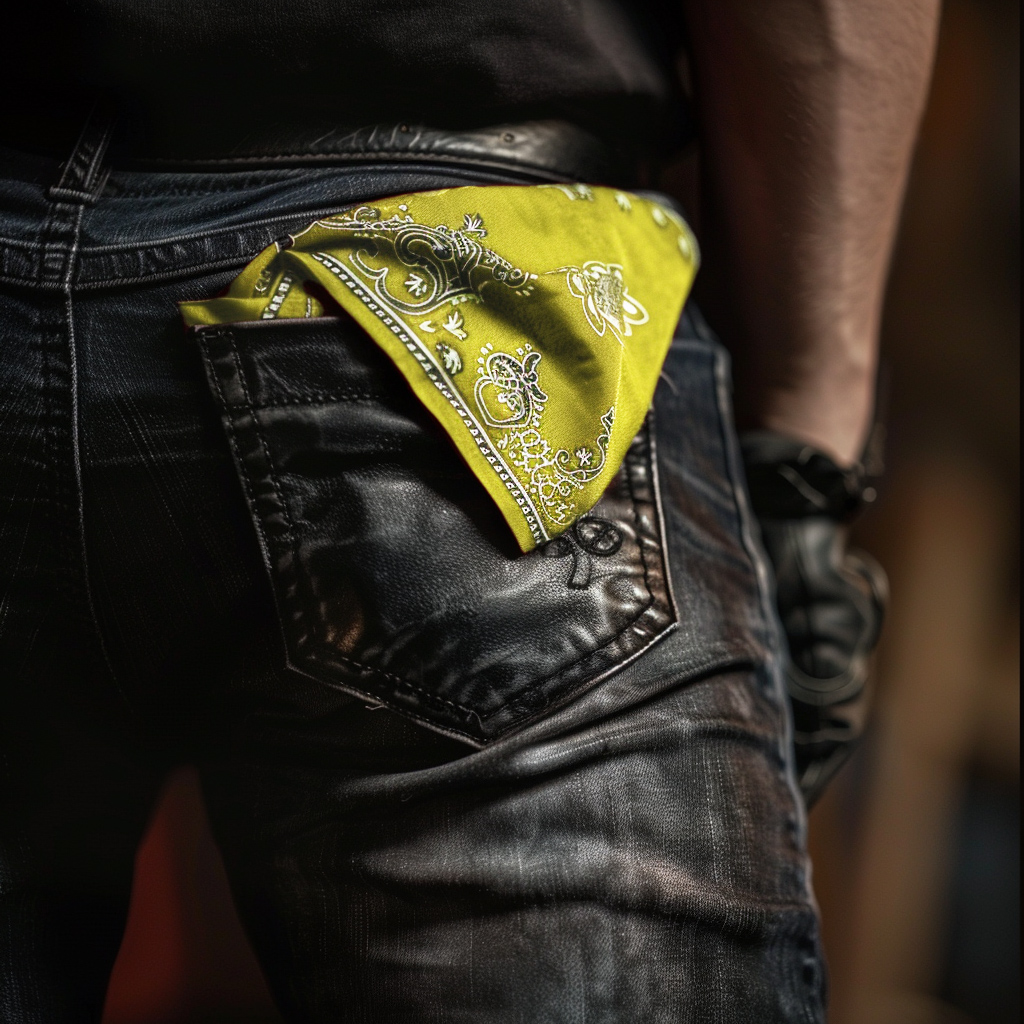
Yellow Lust: The Code of the Flow